Cat® OEM vs. Aftermarket Heavy Equipment Parts: Which Is Better?
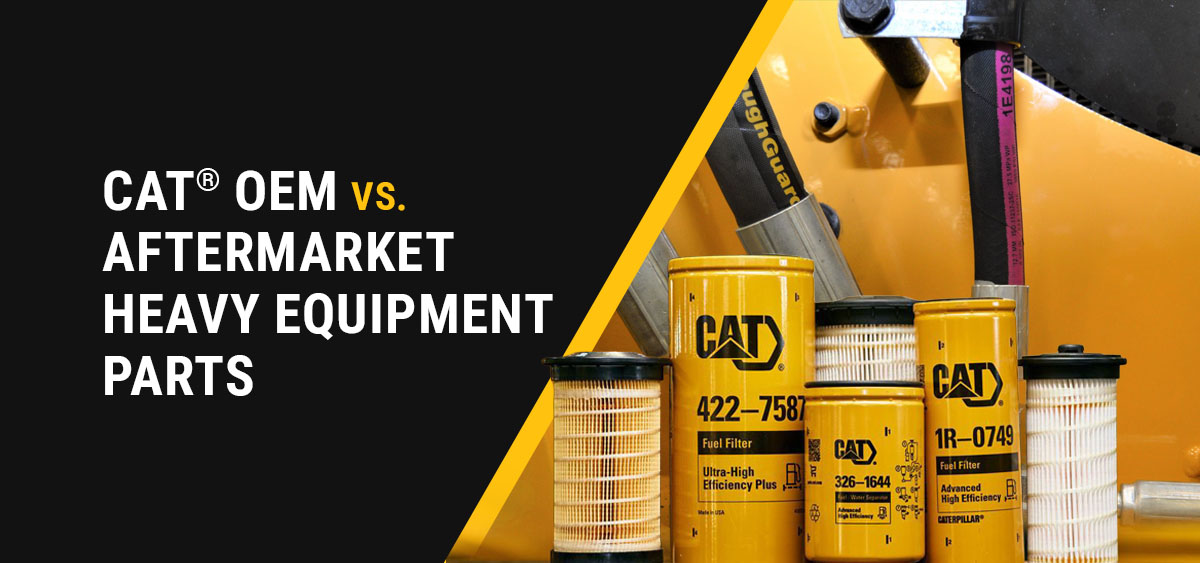
The heavy equipment parts you choose can make a big difference in the machine’s overall performance, reliability and longevity. You’ll run into two options when it comes to sourcing parts — original equipment manufacturer (OEM) parts and aftermarket parts. Each has its pros and cons, so you’ll want to know their differences to decide the right one for your situation.
This guide explores OEM vs. aftermarket construction equipment parts, highlighting features, costs and performance factors to help you determine the parts you get for your fleet.
OEM vs. Aftermarket Equipment Parts
OEM parts are made by the same company that manufactured the original equipment. They are made to the exact specifications of the parts first installed in the machine. In contrast, aftermarket parts are produced by third-party manufacturers, not the original equipment makers. The main differences between the two include:
- Cost: Aftermarket parts tend to cost less, while OEM parts can leverage a recognizable name and quality standards to charge a higher price.
- Quality: Since OEM parts are the same as first installed in the machine, they are guaranteed to work with your equipment. While many aftermarket brands offer excellent quality, it can be challenging to find products that come with the same strong reputation as OEMs.
- Availability: OEM parts only come from one manufacturer, meaning they may be more difficult to find. Aftermarket parts come from many sources, making them readily available. They might also reach you faster with shorter shipping times.
In this way, the main difference between OEM vs. aftermarket construction equipment parts is branding. Think of OEM parts as those name-brand models from original suppliers like Caterpillar. Aftermarket parts, in comparison, usually don’t have the same reputation as the name-brand manufacturers.
Exploring Cat OEM Parts
OEM parts have identical specifications established by the equipment’s original manufacturer. If you purchase a Cat OEM part, for example, it will match Cat’s precise design, materials and performance criteria.
Benefits
Pros of OEM parts include:
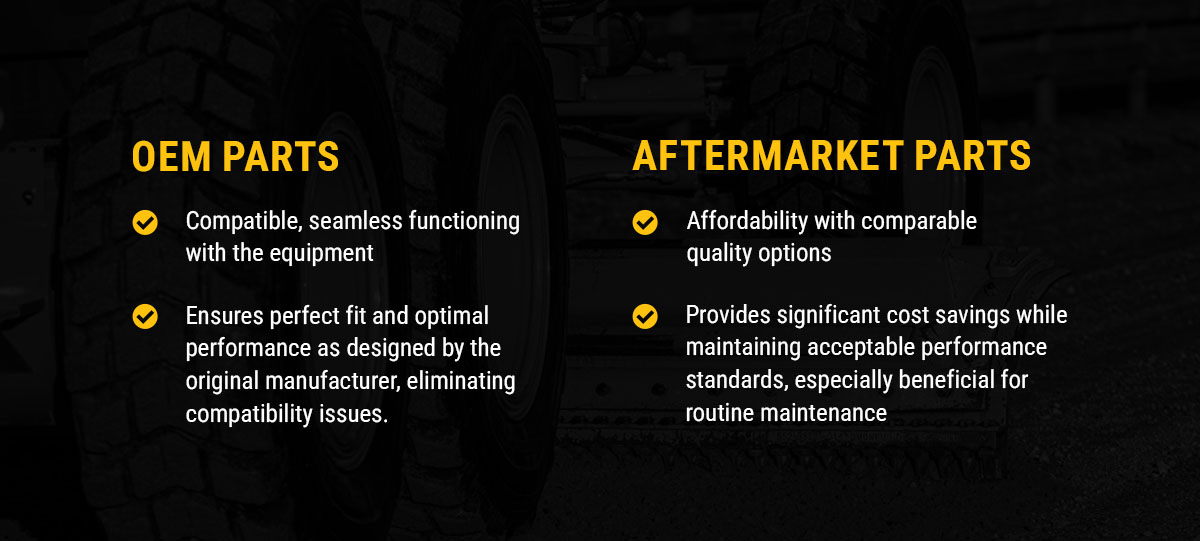
- Compatible, seamless functioning with the equipment
- Backed by reputable manufacturers
- Consistent performance
- Sometimes necessary to comply with your machine’s warranty
Additionally, OEM parts are often more accessible if they have an established distribution network. For example, you’ll find Cat-certified dealers and authorized service centers around the country, making it easier to get compatible parts backed by reliable suppliers. Many dealers also sell used or rebuilt OEM parts, which can be more cost-effective than new parts.
Drawbacks
Cons of OEM parts can include:
- Higher price tag due to precise manufacturing standards and brand value
- Challenging to source, especially for older or less common models
- Fewer customization or upgrade options
- Reliance on OEM parts can lead to less competitive pricing and delays
Since OEM parts are designed to match the original specs, you won’t be able to enhance the equipment beyond those parameters. This could be a drawback if you need to optimize your machinery for a certain application. As such, you’ll want to consider the differences between OEM vs. aftermarket parts to find the right components for your project.
Exploring Aftermarket Heavy Equipment Parts
Aftermarket parts can be an attractive option for their cost-effectiveness and availability. You might find aftermarket Cat equipment parts that perform just as well as or better than the OEM parts.
Benefits
The top benefits of aftermarket parts include:
- Affordability, offering a cost-effective solution for maintenance and repairs
- Comparable quality options, such as aftermarket Cat parts that undergo rigorous testing
- Availability and variety, making finding parts more accessible, including for older or less standard equipment
- Performance upgrades, letting you customize the part for your specific needs
With more flexibility in sourcing, you can often get aftermarket parts faster and with less downtime, making them a great option for high-demand work. Plus, many of these parts are designed to match or even exceed the quality of OEM components.
Drawbacks
While aftermarket parts can cost less and be easier to source, they also have drawbacks to consider:
- Range in quality, with a potential for reliability issues
- Risk of counterfeit parts masquerading as genuine components
- Warranty concerns, since non-OEM parts can void a machine’s warranty
These drawbacks show how important it is to research aftermarket parts before buying them. You’ll need to cross-check the part number against your machine’s make, model and serial number to make sure they’re compatible, and search for reputable brands to ensure quality.
How to Choose Between OEM vs. Aftermarket Parts
To choose between OEM vs. aftermarket heavy equipment parts, consider your machine’s age, part availability and how the part contributes to the equipment’s function. While OEM parts are often preferable for new machines and parts that seriously affect the function of the machine, aftermarket parts might be better suited for older machinery or parts less prominent in the machine’s function.
Consider these factors to make a choice:
Equipment Age
Original parts are usually easy to find for newer models, but you might not have a choice for older equipment. When OEMs stop making the parts for a model, aftermarket brands can often fill the gap. Instead of buying an entirely new machine, aftermarket parts extend the life of your equipment so you can use it much longer. However, if you have a new model, aftermarket brands might not have enough time to design their products, so options could be scarce.
Use Case and Fulfillment Time
Consider how quickly you need the part — OEM parts can be harder to find, and getting one can take longer than aftermarket parts that come from manufacturers with fewer product limitations. If you need the part for routine maintenance, however, OEM parts might be better, as you can order ahead of time and wait as long as you need to. Still, some OEMs may have wide availability, and your location makes a difference, so you’ll want to consider the parts available in your area before making a decision.
Performance and Quality
With an OEM part, you know you’re getting a component that’s compatible with your machine and will function just as well as the original part. However, aftermarket brands can vary widely, with some exceeding the manufacturer’s quality while others fall short. Quality and longevity can also vary between different designs.
Budget
Your budget will also impact the part you get. Since aftermarket parts are usually more affordable, they can fit into a tighter budget. You can also buy used OEM parts to save on costs. Still, upfront costs are just a small portion of the costs of the overall replacement part. You’ll want to think about how long it will last before you need to buy a new one, the benefits that could affect costs or even if it comes with a warranty. Consider whether the part will come with more costs down the road.
Warranty and Support
OEM parts usually come with extensive warranty options and product support, while aftermarket brands vary widely. If you want peace of mind that comes with a comprehensive warranty, you’ll likely want OEM parts. You can also find reputable aftermarket brands with great support, so you’ll do your research to find the parts you need.
Turn to Wagner Equipment for Quality Heavy Equipment Parts and Services
Both OEM and aftermarket parts can be excellent options, depending on your situation. When sourcing quality parts for your equipment, Wagner Equipment is a trusted partner you can rely on. We offer new, used and remanufactured genuine Cat parts, so you have a range of options to meet your specific needs. Our experts will help you find the right solution while providing maintenance, repairs and other tailored services for your success.
Aside from our vast inventory and expert selection assistance, we offer easy availability to help you get your parts quickly. We resupply our locations with parts shuttles so you can trust the product you’re looking for will be there when you need it.
Explore our heavy equipment parts, and contact us or find a location near you to get started.