
Telematics in Construction: Improve Efficiency With Real-Time Data

Construction equipment holds valuable data, but without the right tools, it’s difficult to turn that information into actionable insights. This inefficiency results in businesses experiencing higher fuel costs or underutilized assets.
Telematics captures and analyzes data from your machine, giving you a picture of how your fleet is performing and where it’s being used. You gain the visibility needed to improve efficiency, safety and profitability.
Discover digital technologies, their benefits and use cases in this guide to telematics for construction.
What Is Telematics in Construction?
Telematics in construction is the use of digital technologies to collect, transmit and analyze real-time data from heavy equipment. The technology combines GPS tracking and wireless communication to provide managers with valuable insights into their fleet and operations.
The system works by installing sensors and devices on construction equipment. These devices capture information on equipment usage, including:
- Location
- Fuel usage
- Engine performance
- Idle time
- Operator behavior
- Equipment health diagnostics
The data is then transmitted through cellular or satellite networks to a central platform, where it can be accessed through a dashboard, mobile app or fleet management software.
Key Benefits of Telematics in Construction
The advantages of telematics extend to cost savings, efficiency and safety, allowing businesses to reap measurable results.
Cost Reduction
A strong driver for implementing telematics is the ability to reduce operational costs. Business owners control costs through:
- Fuel savings: The technology allows managers to see where fuel is being consumed, including patterns of excessive idling or inefficient routes. With this insight, companies can retrain operators and adjust workflows to minimize fuel burn.
- Proactive maintenance: Construction telematics provides early warnings on issues such as abnormal engine temperatures or fluid levels, allowing maintenance teams to intervene before a breakdown occurs. This shift from reactive to proactive care keeps machines available longer and extends the useful life of assets.
- Reduced idle time: Idle time shortens equipment lifespan and consumes fuel without adding productivity. Telematics data reveals when and where machines are underused, enabling managers to plan work schedules effectively.
Efficiency and Performance
With telematics, businesses can align equipment capacity with project demand through:
- Optimized equipment utilization: Telematics shows how frequently each piece of equipment is used, helping identify surplus assets that can be reassigned or retired. The result is a leaner, more productive fleet that matches project needs.
- Increased Productivity: By ensuring the right equipment is available, projects run more smoothly. Operators spend less time waiting, and machines spend less time idle. Proper scheduling allows businesses to complete the desired work per day.
- Automated reporting: Instead of relying on manual logs, telematics automates key reporting functions. Managers can access data on fuel usage, machine hours and compliance metrics. Automating these administrative tasks reduces paperwork and minimizes errors.
Safety and Security
Safety and security improvements protect operators and equipment. They also strengthen customer trust by demonstrating a commitment to responsible operations. Telematics allow for:
- Improved safety: Construction equipment telematics monitors excessive speed, harsh braking and overloading. Flagging these patterns allows companies to provide targeted operator training and reinforce safe practices.
- Theft prevention and recovery: Geofencing features notify managers if a machine leaves an approved area, and GPS tracking makes recovery faster if theft occurs. Preventing theft is the goal, but the ability to locate and retrieve an asset minimizes financial and operational setbacks.
- Remote monitoring: Supervisors no longer need to be on every jobsite for safe operations. With telematics dashboards accessible from any device, managers can oversee machine status and operator activity remotely.
Common Use Cases and Applications of Telematics in Construction
Telematics supports a range of applications, giving construction businesses the flexibility to address everyday challenges. Below are 11 ways fleet owners and managers use telematics for construction equipment.
1. Real-Time Location Tracking
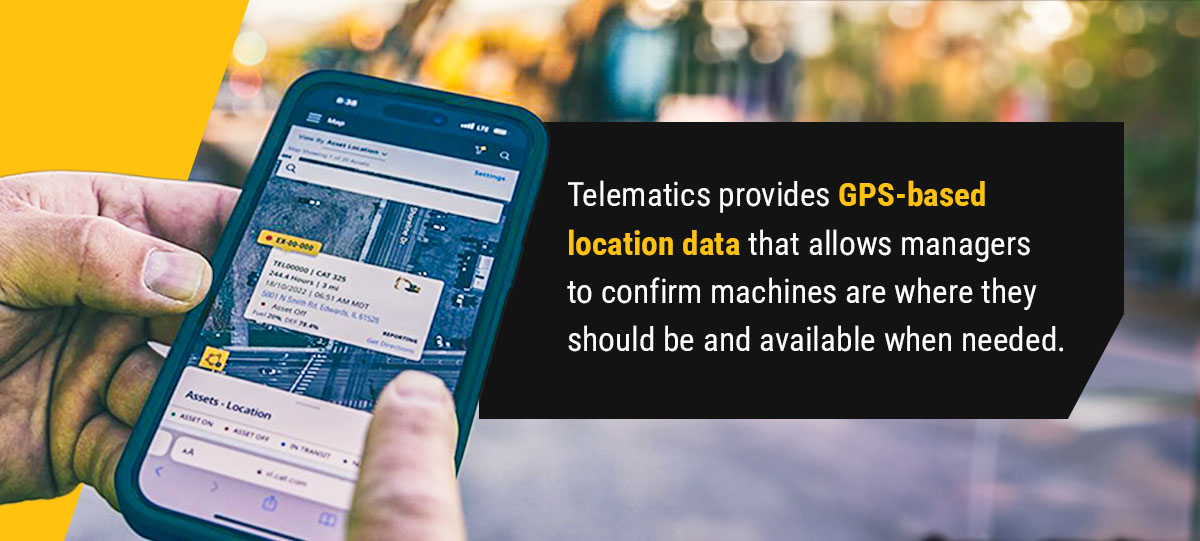
Knowing where equipment is at any moment eliminates uncertainty. Telematics provides GPS-based location data that allows managers to confirm machines are where they should be and available when needed. This knowledge reduces wasted time searching for equipment across large or multisite projects.
2. Equipment Utilization
Machines are expensive to own and operate, yet many fleets include underused assets. Telematics tracks usage hours and workload distribution, showing which machines are fully employed and which are sitting idle. This data allows companies to redeploy or right-size their fleets. Utilization reports also inform purchasing and rental decisions, ensuring capital is invested where it delivers the most value.
3. Fuel Consumption Monitoring
Fuel efficiency is difficult to measure without hard data. Telematics solves this by tracking fuel consumption per machine and per shift. Managers can spot patterns such as overidling or poor operator habits and take corrective measures. For large fleets, improvements in fuel efficiency add up to substantial savings.
4. Geofencing
With geofencing, managers can establish digital boundaries around a jobsite or designated area. If a machine leaves or enters outside of set parameters, alerts are sent instantly. This strengthens security against theft and ensures machines remain within authorized zones. It is useful on projects where restricted areas are involved and compliance and liability are critical.
5. Remote Monitoring and Management
Construction projects are rarely confined to a single site. With telematics, supervisors can monitor multiple sites and machines from one dashboard. This visibility reduces the need for constant travel and ensures consistent equipment management practices across dispersed operations. It also improves response times when issues arise.
6. Operator Behavior Monitoring
Telematics records operator behaviors such as harsh braking or overrevving. This data allows managers to identify training needs and reinforce best practices. Safer and more efficient operator habits lead to fewer incidents and less wear on machines.
7. Optimized Routes and Scheduling
Route optimization is a powerful application for fleets that move between sites or transport materials. Telematics analyzes travel times and congestion patterns to identify the most effective paths. Scheduling integration ensures that equipment arrives when crews need it.
8. Equipment Safety Alerts
Telematics systems continuously monitor equipment health and send alerts when unsafe conditions occur. Issues such as overheating, low oil pressure or critical fault codes trigger notifications suggesting that service may soon be required.
Addressing problems early allows companies to prevent minor issues from escalating, while also ensuring operator safety.
9. Compliance With Regulations
Construction regulatory compliance involves tracking emissions, working hours and operator certifications. Telematics automates these processes by capturing the required data and generating records for inspections or audits. Automation reduces administrative burden while providing confidence that operations align with environmental and labor requirements.
10. Integration With Other Systems
The value of telematics for construction increases when its data is integrated with broader business systems. Information can flow into enterprise resources planning (ERP) or financial systems, creating a unified view of costs, productivity and resource allocation.
Integration helps break down silos and supports coordinated decision-making.
11. Customizable Dashboards
Not every role in a construction company needs the same data. Telematics platforms offer customizable dashboards, allowing managers and operators to see the information most relevant to them. Whether it is fuel efficiency or fleet availability, dashboards put actionable data at the fingertips of the right people.
Get Cat® Telematics Solutions at Wagner Equipment Co.
Wagner Equipment Co. helps construction businesses streamline operations through telematics. Through Cat® digital solutions, including the VisionLink® platform, we make it easy to monitor and manage fleet from one place. You can see fuel use, idle time, machine health and location in real time.
Our team works with you to configure dashboards, set up alerts and integrate telematics into your existing workflows. For over 40 years, we’ve been providing quality service and support to Colorado, New Mexico and far West Texas. We provide the tools, training and support to help you get the most from your telematics investment.
Contact us today for Cat equipment telematics.
