
If you have a skid steer with a disconnected track, it means the track slipped off the sprocket, climbed a roller or kicked sideways off an idler. The machine won't move, the whole crew ends up waiting and operators can't finish the grade or load material. For every minute the skid steer sits off the sprocket, it's costing time and money.
While it's frustrating, the good news is that a popped-off track on a skid steer can be fixed in the field if the undercarriage isn't damaged. This article walks you through how to get a thrown track back on, when it's a good idea to call a professional and some tips to prevent future derailments.
First, Inspect for Damage
If the track just came off and the machine is already dead in place, don't try to move it. Drop the bucket where you are, lower the arms and make the machine as stable as possible. Make sure the good track can't roll. Block it in the front and back with wheel chocks or a ratchet strap. If you don't have those on hand, slide some wood there to keep the machine from moving.
On the thrown side, look for torn or missing lugs, cracked rubber or spots where the track is stretched enough to bunch around the sprocket. Check the drive sprocket teeth — if they're hooked, bent or worn sharp, the track won't stay seated.
Since the machine can't move, rotate the track a few inches at a time with a pry bar to expose each roller and idler. Spin each one as it comes around, as a frozen, loose or flat-spotted roller is often what kicked the track off.
If the rollers spin, the sprocket teeth look healthy, and the track isn't torn or stretched out of shape, you can try to retrack it yourself. If anything is seized, cracked or damaged, that's your sign to stop and call for help.
The Tools You Will Need
To get a de-tracked skid steer back on track, you just need a few tools that let you lift safely, bleed tension and then muscle the track on again. Grab the following supplies:
- Wrench set for the tensioner valve: The bleed valve size varies by make and model, and you need the exact fit to loosen it without rounding the fitting.
- Two heavy pry bars: You need strong pry bars that will give you enough leverage to walk the track over the sprocket, then over the idlers without fighting the rubber.
- Grease gun: You'll use this to tighten the track and set proper sag once it's seated.
How to Fix a Thrown Skid Steer Track: Step-By-Step Guide
Once you've gathered your tools, follow these four steps to replace the skid steer tracks:
Step 1: Safely Lift the Machine
Before you work the track on, the machine must be fully supported and immobile. Your goal here is to lift the weight off the thrown side and ensure the machine is stable. You want to do the following:
- Drop the bucket flat and dig the lip into the ground, and then curl it all the way down. This will be your main anchor point.
- Lower the arms so that the front of the machine is resting on the bucket, and then shut off the engine.
- Chock the front and back of the good track with anything solid you can find, like wood blocks or tires.
Depending on the type of surface you're on, the skid steer could settle an inch or two without warning. You want to minimize the risk of any movement while you're working on the track.
Step 2: Release the Track’s Tension
This step involves releasing pressure from the tensioner, allowing the track to regain enough slack to work back into place. If there's mud or compacted gravel under the rollers, knock it out now. In winter, ice buildup is the top cause for de-tracking as the ice lifts the track and “ramps” off the idlers.
Follow these steps to release the track's tension:
- Loosen the grease valve slowly.
- Place a rag underneath it, as the grease will push out under the pressure.
- Keep bleeding the tension until you feel the track is loose enough to move around by hand.
Step 3: Guide the Track Onto the Sprocket and Idlers
Here, you'll focus on getting the track to bite the sprocket, then walking it over the idlers and rollers without fighting it. The machine is already stable and the tension is loose — now, you're only physically putting the track where it belongs.
Follow these steps:
- Always start at the top and lay the loose track over the top of the drive sprocket. If it won't drape, bleed it a little more.
- Wedge the pry bar between the second and third lug. Roll the sprocket backward by hand or creep reverse until six to eight lugs click in.
- Move to the front idler and use your shorter pry bar to lift and guide the track over it, then drop it onto the roller path.
- If it still won't catch, roll the sprocket backward by hand while you get a colleague to creep reverse it to help the lugs bite.
- Once the track is on the idler, check that the lugs sit straight on the rollers. Clear any dirt, ice or stones behind the idler if it slips.
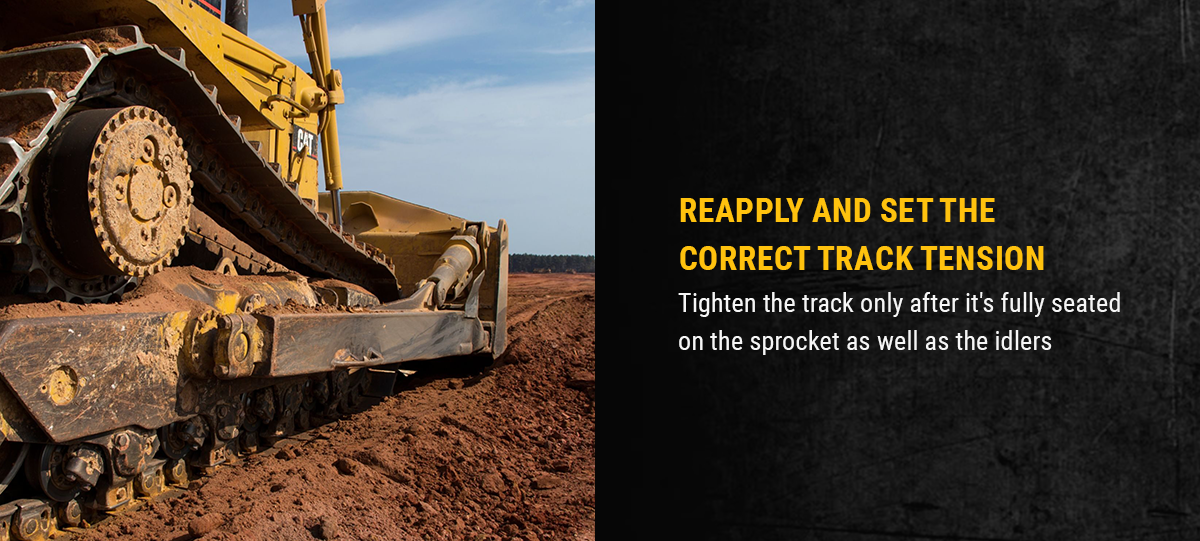
Step 4: Reapply and Set the Correct Track Tension
Tighten the track only after it's fully seated on the sprocket as well as the idlers. The goal is to bring the sag back to the correct spot so that the track stays in place once the machine moves:
- Close the grease valve once the track is fully back in place.
- Attach the grease gun to the zerk fitting and pump grease slowly and steadily until you feel the track begins to tighten.
- Keep adding grease while watching the sag in the middle of the track between the idler and drive sprocket.
- Use the field rule — stand on the track with your full weight halfway between the sprocket and the front idler. You want 2 to 2.5 inches of drop.
- Different manufacturers run different sag numbers, so check your model's manual instead of relying only on the field rule.
- After tensioning one side, repeat the process on the other track so both sides match.
- Never overtighten. If the track feels drum-tight with almost no sag, bleed some grease immediately.
Why Do Skid Steer Tracks Come off in the First Place?
A skid steer track usually only comes off when something forces it out of alignment. The most common causes are:
- Sharp, fast turns on hard-packed ground.
- Frozen mud or ice buildup under the rollers.
- Running tracks that are too tight or too loose.
- Worn sprockets, idlers or rollers.
- Packed debris pushing the track out of line.
When You Should Stop and Call a Professional
If any of these issues occur, forcing the track on again won't solve the problem. You should call a professional if:
- The track is torn, stretched or won't hold tension.
- Rollers or idlers are frozen or damaged in other ways.
- The machine retracks and immediately de-tracks again.
- You don't have safe cribbing or enough room to work.
- The machine still pulls to one side after tensioning.
Tips to Prevent Future Track Issues
Thawing ice before moving the machine and cleaning the undercarriage at the end of every shift goes a long way toward preventing future problems. Avoid pivoting — take wider turns so the track isn't forced sideways and avoid going too close to curbs, which can kick it off-line.
Check sag every morning using the 2- to 2.5-inch rule. Keep a grease gun and a small “sag stick” in the cab so you can adjust it on the go.
Need Emergency Field Service? Wagner Equipment Co. Is Here to Help
If putting the track on the skid steer yourself isn't possible, the Wagner Equipment Co. technicians are ready to help. We provide 24/7 emergency field service across Colorado, New Mexico and far west Texas, handling everything from simple retracking to full undercarriage repairs.
Don't let a thrown track compromise your productivity. Contact us for 24/7 field service, whether you need a full repair or advice on how to change out skid steer tracks. We get most customers moving again on the same day, so your business isn't interrupted.
